The risks of rapid opiate detox

83

By recovering addict

Is rapid opiate detox a good idea?

A conventional detox off of opiate (heroin, vicodin etc.) type drugs is a grueling and painful experience, and when addicts hear of the promises made by rapid opiate detox clinics, it's natural to feel interested.

Rapid opiate detox promises a complete end to the pains of detox within a day, and since patients endure the procedure under anesthetic, advocates promise a completely pain free experience, and a complete cure over a weekend. When you consider the many days of agony as normally endured in a detox, if rapid opiate detox clinics can deliver what they promise, what's the downside?

How does rapid opiate detox work?

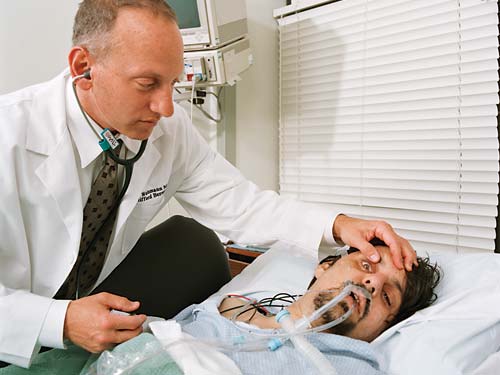
Opiate addicts are placed under anesthesia and they are injected with a cocktail of drugs aimed to intensify and accelerate the process of detox. Were patients conscious for this accelerated detox, the pains would be unbearable, but as they remain sedated they awake at the end of the sedated detox with no memory of any pain, and with the physical addiction to opiates completely finished.

Sounds good…what's the catch?

Too many opiate addicts continue with abuse and addiction for years out of a very real fear of the pains of detox, and therapeutic advances that promise a more humane detox experience have great potential to increase treatment compliance, and by extension, reduce our societal problems with drugs and alcohol.

There is no denying that the treatment offers promise, but as it's currently administered, there are some serious concerns with the health risks, the costs and the efficacy of the rapid detox procedure.

Health risks

Detox is tough on the body, and a rapid detox is tougher. Although you do not consciously feel the pains of this quickened detox, your body must endure an intensified and accelerated period of detox, and this can be very taxing on the body…and doubly so as many addicts do not enter into detox in the best of health.

There have been a number of deaths related to the procedure, where patients have died within days of a rapid detox, and one prominent clinic was closed down over concerns over health and safety.

Advocates argue that although there are risks, the risks of a lifetime of abuse and addiction are greater, and for society as a whole rapid opiate detox betters health. This may or may not be true, but it is not likely very encouraging on an individual basis and when deciding on personal options.

Efficacy

Rapid detox works, and once finished with the sedated withdrawal the worst of the pains are over, and no one questions the legitimacy of the procedure for its efficacy over withdrawal.

But when rapid opiate detox advocates start talking of a one day cure, addictions professionals start to object. Detox is only the first step of many on the road to recovery, and detox alone does nothing to better the problems that led to abuse, and if unresolved remain likely to again lead back to use. Detox alone also does not teach needed strategies for dealing with the cravings and temptations that will inevitably emerge throughout the initial months and even years of abstinence.

Rapid opiate detox clinics do prescribe naltrexone for pharmacological cravings management, but the reality and pervasiveness of addiction discludes such a minimal type of therapeutic intervention as sufficient.

Rapid opiate detox will work, and if you define success as a complete physical detox, they are very good at what they do; but since most addicts define success as long term sobriety, getting through detox alone is not likely enough for an achievement of the ultimate and necessary goal.

Costs

Addiction recovery is big business, and there is no denying that rapid opiate detox clinics are striving for a piece of that lucrative pie; and while there is nothing wrong with seeking a fair profit, when the only people that seem to be advocating the procedure seem set to profit directly, it should cause some concerns.

The price tag of a one day rapid opiate detox ranges from $15 000 to $20 000 on average, and this price is not inclusive of any aftercare therapies towards relapse avoidance. Since the procedure remains quite controversial and not widely endorsed, no insurance carrier will currently offset any of the costs of treatment.

The costs are comparable to the expenses of a month of private drug rehab, and if the two programs offered an equal chance at sobriety, the price would be reasonable; but since without therapy experts concede that relapse is likely, $20 000 seems like a lot to pay.

A promising form of treatment

There is no denying the promise of rapid opiate detox, but as it’s currently offered, the health risks and risks of relapse do not make a rapid opiate detox a wise investment.

Hopefully with further research and a better understanding of addiction and the brain, the techniques of humane rapid detox can be safely incorporated into a more comprehensive therapeutic experience.


Comments

teeray profile image

teeray 4 years ago

Thanks for a great article, outlining both pros and cons of Rapid Opiate Detox. I was shocked at the COST, which I expected to be a definite blow to the pocket, but NOT THAT expensive!

recovering addict profile image

recovering addict Hub Author 4 years ago

Yeah, it's a definate money maker for those that offer it!

It has potential, and hopefully it gets a bit safer, a lot cheaper and gets more incorporated in with long term therapies of relapse avoidance. Then it might really become a great thing.

Jesus 2 years ago

Wow i have been addicted to xanax almost 12 years. It started

as a prescription medication for panic attacks. I am not sure

i will ever be able to get off. Those prices are criminal. Just as criminal as the people who allowed such a addictive

substance on the market. It's one thing to get into heroin

by choice but to get hooked on it because you needed help...

and then learn you CANNOT get off. Lord have mercy.....................

Randall 2 years ago

There is a great place in Michigan that does a rapid detox under anesthesia and their charge is only $6700. They also offer the Naltrexone Implant to prevent relapse. They give very good and compassionate aftercare and they do care for the patients. I would advise anyone looking into this to check them out at and talk with Jeanne. She really knows her stuff. They understand that this is the first step in a long journey for continued sobriety but they help you get through the tough withdrawal without suffering and the implant will keep you clean because it is an opiate blocker, not addicting and not an opiate though. You wont have to end up addicted to another opiate like Suboxone. they will get you clean and you can start doing what needs to be done to stay clean.

Philip 2 years ago

I went through rapid detox and it was very costly. You really got it right the after care also carried a pretty penny.

kimh039 profile image

kimh039 Level 6 Commenter 2 years ago

Thanks for the informative piece, RA. I hadn't heard of rapid opiate detox. It sounds promising for the future. Insurance doesn't always cover traditional opiate detox either, because it's not considered life threatening like withdrawal from alcohol and benzos (xanax, valium, etc.) You feel like you're going to die, but you're not.

kekeja 13 months ago

Deaths Highlight Concerns Over “Ultra-Rapid Detox”

by John Dillon

A controversial drug detoxification method that uses anesthesia to take the edge off withdrawal symptoms once again has come under fire after Michigan authorities suspended the licenses of two doctors in whose care two patients died.

Proponents of “ultra-rapid detox” say that the acts of a few charlatans have given the technique a bad name. Opponents, however, say that the deaths are evidence that the approach should be abandoned.

Ultra-rapid, anesthesia-assisted detoxification was developed in the early 1990s as a way to treat people addicted to heroin and other opioids. Patients are put under while doctors administer an opioid blocker that starts the withdrawal process. Its lure is the anesthesia, which renders the patient unconscious for the first few painful hours of withdrawal; it has often been called “detox in a day.”

Because many hospitals won’t give admitting privileges to doctors who perform the procedure, it is often done at clinics, including Project Straight in Troy, Mich. According to a statement by Mike Cox, Michigan’s attorney general, two patients being treated by Robert A. Wolf, MD, and Aeneas Guiney, MD, Project Straight’s former partners, died and three others required hospitalization. The doctors’ licenses were suspended for several violations, including failing to employ proper methods in screening potential patients and failing to provide professional follow-up. According to Mr. Cox, both doctors released the patients with no one to assist them, even though they had received “a host of potentially lethal medications with ambiguous dosage instructions.” It is not the first case of deaths among patients undergoing rapid detox: In New Jersey, two doctors had their licenses suspended after seven detox patients died under their care.

The deaths do not surprise Eric Collins, MD, medical director of Addiction Services at Columbia University in New York City, who took part in a 2005 study that found that anesthesia-assisted detox does not work any better than other methods, is not easier for the patient to endure and can be dangerous (JAMA 2005;294:903-913).

Withdrawal symptoms are “not painless once they’re awake,” Dr. Collins said. “The body doesn’t really allow for that. It takes weeks.” The Columbia team compared rapid detox using anesthesia with buprenorphine (Subutex/Suboxone, Reckitt Benckiser)–assisted and clonidine-assisted methods, both of which also use naltrexone. The anesthesia-assisted method was the least effective, and three patients treated with it required hospitalization. Although the patients were under the close supervision of the study team, “we still had one patient with pulmonary edema,” he said. “There’s no good way to get rapidly off heroin, but you can quite comfortably get off it using buprenorphine.”

Defenders Claim Skill, Not Method, Wanting in Deaths

Others, however, believe ultra-rapid detox does work, provided it is performed competently.

“It’s a good procedure that has oftentimes been in bad hands,” said Ronald H. Wender, MD, co-chair of the Department of Anesthesiology at the Cedars-Sinai Medical Center in Los Angeles. “This is a medical procedure like any other medical procedure: It needs to be done in the appropriate setting with the appropriate equipment with the appropriate people.” Dr. Wender, who has been doing anesthesia-assisted detox for 15 years, said it is not a cure, but it can help addicts get clean with less pain. The cost ranges from $3,000 to $17,000, with the more expensive treatments providing professional aftercare. “If you don’t get them [addicts] detoxed, you don’t get them in aftercare,” Dr. Wender said. “The real key to success is the aftercare program.”

Addiction counselor Jake Epperly said his rapid detox programs in Chicago and Los Angeles are successful specifically because they have good aftercare programs. “There is still some discomfort for a few days,” he said, but “cravings are also greatly reduced” with anesthesia.

Some patients don’t do well with rapid detox because they have comorbid conditions or are on other illicit drugs, like cocaine, that can leave them susceptible to arrhythmias, Dr. Wender said. The Columbia study was flawed, he said, but he acknowledged that there are no solid studies supporting the method.

Anesthesiologist Marc E. Koch, MD, MBA, president of Somnia Inc. in New Rochelle, N.Y., said that buprenorphine, which came on the market in 2002, could be more effective—and far less risky—for most addicts. “These patients can be treated in a much more gentle, subtle and tapered approach,” he said.

Dr. Koch added, however, that anesthesia-assisted detox may work for some addicts. “It needs to be a tool in the toolbox.”

michelle 3 months ago

I am going to be doing the rapid detox in August. I think its cheapier then going to a detox center and going threw the withdrawl. Your insurance only covers 7-10 days. The detox centers recommend 30-90 days which cost $14,000 to 25,000 my rapid detox is aprox $9000 including everything hotel meals only thing i pay for is to fly there. Im very nervous!! And worried how will i feel when i wake up?

Chad 3 months ago

Michelle: Who are you going to and does insurance pay?

DS 3 months ago

Michelle, I'm also planning on going to a rapid detox within the next 3 months..please let me know who and where u went and how the whole experience is..I'm also very nervous to go but I can't go cold turkey...thanks Michelle and good luck

chad or michelle 3 months ago

please let me know how it goes , I also would like to try it but want to research it well. thank you

jj 2 months ago

I went through RDD in Michigan and while it is no walk in the park, that's for sure, but so far so good. The 1st day is the absolute worst. It definitely has a major impact in your body. BUT, you are very closely monitored by awesome people that really care as they pump fluids, vitamins, and Amino Acids into your body. But, by Day 2, you are just very very tired. In fact, it has almost been 2 weeks and yesterday was my first day I can actually get out of bed without feeling like a 98 year old man. But, believe it or not, I was eating by Day 3. Hungry for real food, not just sweets. It takes a while for your endorphines to work on their own, which is why you will feel so bad. I do not understand why I feel SO OUT OF BREATH from the slightest walk from one room to another.

I used Oxycodone off and on for 4 months. Then I went on a Suboxone Program, which was my greatest mistake ever. If you take the Suboxone in very small doeses for about 4 days, then bear the rest of the withdrawals on your own - that is my best advise and the least amount of pain. BUT, I went on a program that put me on a very high 16 mg per day dose and within 1 month, I knew something wasn't right. I was so constipated (and have yet to recover from that). I still battle going to the bathroom. But, it was explained to me that opiates attach themselves to receptors in your colon - which is why opiate addicts have such a hard time going to the batchroom.

But, DO NOT go the Suboxone route unless you only plan to be on it for a few days then kick.

It has been almost 2 weeks since my procedure and I still suffer from RLS, insomnia, and general fatigue. But, you are given the best of care at RDD in Michigan. They ensure you have medication for all of the side affects afterwards (except for the fatigue). There's nothing anyone can do about that. Only time - when you brain starts producing natural endorphines.

The procedure is expensive. But, I only went because I really wanted off Suboxone and didn't want to go throught a long and agonizing withdrawal (which from what I hear Suboxone and Methadone are the worst to recover from).

It hurts. I will not sugar coat it. But, if you are in a bind where you can't get off on your own, then I would do it. But, I made sorry mistake of getting on Suboxone; which is the only reason i opted for RDD.

Suboxone is a killer. No doubt about it. I'm gla I was only on it for 2 months when I had the procedure. Which is probably why I fared better than the poor sod across from me who was on methadone for 5 years!

Jake 2 months ago

So you recommend Rdd mi. And how long we're u under did you have any of the bad Ed symtms after u woke.

RonE 7 weeks ago

I went to a rapid detox in Detroit called Eagle Advancements. Nice people good place. This treatment however still isn't a walk in the park. It was my 3rd treatment for opiate addiction. First rapid detox. They put you under and I honestly dont remember anything from the moment I laid on the medical bed. Woke up not feeling anything. Had been using OC 80's 3-4 a day or good Bmore H or 20mg dillauded etc.. Very high tolerance, had been using for over a year. That night back at the hotel room that have someone in a hotel room next to you who can watch over you if needed. Was hallucinating hardcore, felt like death. I guess the procedure does take a big chip off the iceburg, but no cake walk at all. But you will still have withdrawls for 3 days. Made them very accute 3 days of flaming hell instead of 1 week of hell 2 weeks of half hell and month of acute w/d sleep apnia etc. Had no appetite for 3 days, was throwing up everything. Night after operation/treatment was throwing up black bile, dont even know what it was. Couldn't eat for 1.5 days before the treatment , could only have gatorade and 500 grams of something like dulcolax to clear out your system completely. Having to do that before the treatment waking up off anesthesia, all those drugs on an empty stomache... I've withdrawn off of opiates 6-7 times now. I really cant form an opinion if i thought the rapid detox was better or not. The biggest things were the 3 days in flaming hell, no appetite AT ALL, worse than any other w/d, being so weak. The benifits were feeling about completely better 4-5 days later other than weakness from malnutrition but no acute w/d sleeping problems etc. Procedure cost 10K. Opiates aren't something to mess around with. Walking around feeling like sex is a very addictive feeling... let alone it actually being ADDICTIVE. I heard once you replace 1/3 of your body nutrition with a drug theirs a good chance you will become an addict. Not just addicted. It sure as hell doesnt CURE you HAHA. Eagle advancements had the naltrexone shot follow ups that block your opiate receptors for a month, you get a new shot every month. They call and check on how you are doing/phone therapy and pay for your shots as long as you keep getting them. I realized I had a super fast metabolism and the shot that was supposed to last a month wore off for me in about 2 weeks. 4 months of getting the shots I was addicted again after going on two week binges and wouldn't ya know who wants to get a shot that blocks making you make yourself feel better. In recovery again. Got 4 months. Suggest you get sober and go to NA/AA meetings. Stick with the old timers, find something they have that you want and get in their pocket. One day at a time.

detox ny 3 weeks ago

nice and good blog the patients. I would advise anyone looking into this to check them out at and talk with Jeanne. She really knows her stuff

jay 2 weeks ago

The most important thing is your safety and proper care an monitoring and that means the detox should be done in a hospital. Eagle does not do this in a hospital and taht is why their patients end up in a hotel room after they wake up. A HOTEL ROOM RIGHT AFTER DETOX IS DANGEROUS AND NOT A SAFE SETTING!IT MUST BE DONE IN A HOSPITAL! Only 3 places do this in a hospital, Rapid Drug Detox Center, MRODS and Waismann Institute. Also the doctors should be board certified.

Submit a Comment
Members and Guests

Sign in or sign up and post using a hubpages account.


    • No HTML is allowed in comments, but URLs will be hyperlinked
    • Comments are not for promoting your Hubs or other sites

    Please wait working